Navigating the complexities of project development can often feel like charting a course without a map. Without a clear understanding of what needs to be built, why it’s needed, and what success looks like, projects can quickly veer off track, leading to missed deadlines, budget overruns, and stakeholder dissatisfaction. This is where a robust business requirements brief template becomes indispensable, serving as your compass and blueprint for success. It lays out all necessary details upfront, ensuring everyone is aligned from conception to completion.
This article will explore the critical role of a well-structured business requirements brief, its key components, and how leveraging a standardized template can significantly enhance your project outcomes. We aim to equip professionals, employers, and project managers with the insights needed to implement this essential tool effectively within their administrative and strategic planning processes. Understanding these elements is fundamental for clear communication and successful project delivery.
Why a Robust Business Requirements Brief Is Crucial for Project Success
Many projects fail not due to a lack of effort, but because the initial business needs and desired outcomes were not clearly defined. Ambiguity at the outset can lead to scope creep, feature bloat, and a final product that doesn’t meet its intended purpose. A detailed business requirements brief acts as a foundational document, providing clarity and direction for all involved parties. It bridges the gap between high-level business goals and the technical specifications needed to achieve them.
Implementing a standardized business requirements brief template offers numerous advantages. It ensures consistency across projects, making it easier for teams to understand and adapt to new initiatives. This document minimizes misunderstandings, fosters collaboration, and serves as a single source of truth throughout the project lifecycle. Furthermore, it provides a strong basis for making informed decisions and managing changes efficiently.
Key benefits of using a comprehensive brief include:
- Clearer Communication: It translates complex business needs into understandable requirements for technical teams.
- Reduced Scope Creep: By defining project boundaries early, it helps prevent uncontrolled changes and additions.
- Improved Stakeholder Alignment: Ensures that all stakeholders have a shared understanding of the project’s goals and deliverables.
- Enhanced Decision-Making: Provides a reference point for evaluating solutions and resolving conflicts.
- Better Resource Allocation: Helps in accurately estimating time, budget, and personnel required.
- Higher Project Success Rates: Projects with well-defined requirements are significantly more likely to succeed.
Essential Components of a Comprehensive Business Requirements Brief Template
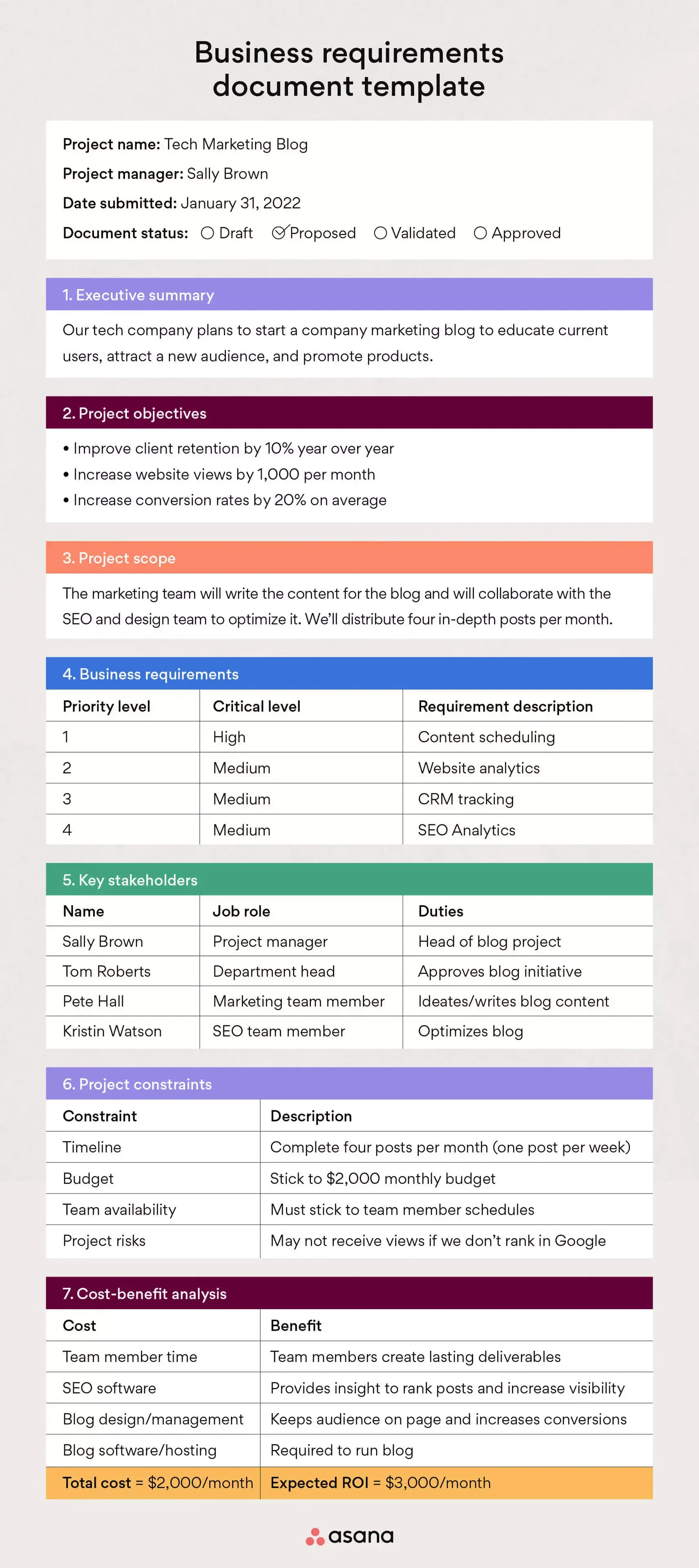
Creating an effective business requirements brief involves detailing several critical aspects of a project. A well-designed template guides you through these necessary sections, ensuring no crucial information is overlooked. This structured approach simplifies the requirements gathering process and improves the quality of your project planning. Below is a sample business requirements brief template outlining the core elements typically included.
| Section | Description | Key Details to Include |
|---|---|---|
| 1. Project Overview | A high-level summary of the project, including its purpose and overall goals. | Project Title, Date, Version, Author, Brief Business Case, Vision Statement. |
| 2. Business Need & Objectives | Explains the problem or opportunity the project addresses and the desired business outcomes. | Current Problem/Opportunity, Desired Business Objectives (SMART), Success Metrics. |
| 3. Stakeholders & Users | Identifies key individuals or groups impacted by or involved in the project. | Primary Stakeholders (sponsors, managers), End Users (roles, needs), Communication Plan. |
| 4. Scope Definition | Clearly defines what the project will and will not deliver. | In-Scope Features/Deliverables, Out-of-Scope Items, Dependencies, Assumptions. |
| 5. Functional Requirements | Describes the specific functions or capabilities the solution must perform. | User Stories, Use Cases, System Behaviors, Data Inputs/Outputs. |
| 6. Non-Functional Requirements | Details criteria that judge the operation of the system, not specific functions. | Performance, Security, Usability, Scalability, Reliability, Compliance. |
| 7. Constraints & Risks | Outlines any limitations, restrictions, or potential challenges. | Budget, Timeline, Technical Limitations, Resource Constraints, Potential Risks and Mitigation. |
| 8. Approval & Sign-off | Documents formal acceptance of the requirements by key stakeholders. | Sign-off names, roles, and dates. |
This sample structure provides a solid foundation, allowing you to tailor the specifics to your organization’s unique needs. Each section contributes to a holistic understanding of the project, ensuring all angles are covered before development begins. Using a template ensures comprehensive documentation and streamlines the initial project phase.
Leveraging Your Business Requirements Brief Template for Optimal Outcomes
Once you have a well-structured business requirements brief template, the key is to use it effectively throughout your project lifecycle. Start by involving relevant stakeholders early in the requirements gathering phase. Their input is invaluable for accurately capturing the business needs and ensuring buy-in for the proposed solution. Regular communication and validation of requirements will help avoid costly rework down the line.
Remember that a business requirements brief is a living document, not a static one. While it defines the initial scope, be prepared to manage changes through a formal change management process. Periodically review and update the brief as the project evolves, ensuring it accurately reflects the current state and agreed-upon direction. This adaptability, combined with clear documentation, is crucial for navigating dynamic project environments.
In conclusion, adopting a standardized business requirements brief is more than just a procedural step; it’s a strategic investment in your project’s future. It lays the groundwork for clear communication, mitigates risks, and significantly increases the likelihood of delivering successful outcomes that truly meet business needs. By meticulously defining goals, scope, and requirements upfront, you empower your teams to build solutions that are impactful and aligned with organizational objectives.
Start leveraging a comprehensive template today to bring greater clarity and control to your projects. Empower your teams with a shared vision and a concrete plan, transforming ambiguous ideas into tangible successes. Your commitment to thorough documentation, starting with a robust business requirements brief template, will undoubtedly streamline your development process and elevate project performance.
