Organizing a successful internal event, whether it’s a team-building workshop, an annual company meeting, or a festive holiday party, often feels like a daunting task. Without a clear roadmap, even the most well-intentioned plans can unravel, leading to confusion, missed deadlines, and unexpected costs. A well-structured document is your best defense against such chaos, ensuring everyone involved is on the same page from the outset.
This comprehensive guide will show you why an internal event brief template is indispensable for efficient project management and seamless execution. We’ll delve into the core elements of an effective event brief and provide a practical, ready-to-use template to streamline your planning process. By the end, you’ll be equipped to produce crystal-clear event briefs that drive success and foster collaboration within your organization.
Why an Internal Event Brief is Essential for Success
A robust internal event brief acts as the central command for any company gathering, big or small. It’s more than just a checklist; it’s a strategic document that clarifies objectives, defines responsibilities, and sets expectations for all stakeholders. This foundational brief prevents miscommunication, which is often the biggest hurdle in event planning.
Moreover, a detailed event brief ensures consistency across all aspects of your event. From budgeting to vendor selection and internal communications, every decision can be cross-referenced against the brief’s objectives. This helps maintain focus, preventing scope creep and ensuring resources are allocated effectively. Think of it as your event’s North Star.
This crucial document also serves as a historical record, offering valuable insights for future events. By documenting what worked and what didn’t, your organization can continually refine its event planning processes. This continuous improvement cycle is vital for operational efficiency and delivering increasingly impactful experiences for employees and internal audiences.
Key Components of an Effective Internal Event Brief Template
Crafting an effective event brief means including all pertinent details without overwhelming readers. It should be comprehensive yet concise, providing a clear overview and actionable information for every team member involved. A standardized internal event brief template ensures that no critical detail is overlooked during the planning phase.
Below is a sample structure for an internal event brief template, designed to cover all essential areas. This format helps organize your thoughts and communicate your vision clearly to everyone from the marketing team to IT support. Utilizing such a template fosters accountability and promotes a unified approach to event execution.
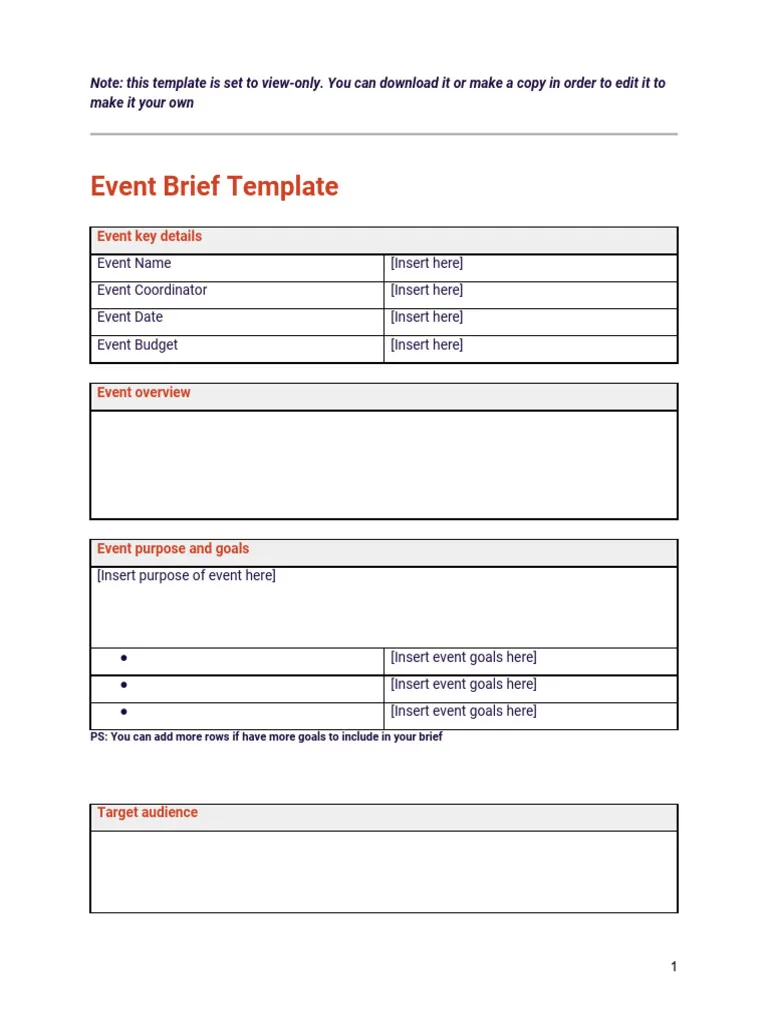
Sample Internal Event Brief Template
| Section | Key Details to Include | Purpose |
|---|---|---|
| Event Title | Specific name of the event (e.g., “Annual Sales Kick-off Meeting 2024”) | Clearly identifies the event. |
| Event Date(s) & Time(s) | Start and end dates, specific timing for key activities. | Establishes the event timeline. |
| Location / Venue | Physical address or virtual platform details (e.g., Zoom link, conference room). | Informs attendees and organizers where to be. |
| Event Lead / Owner | Name and contact information of the primary organizer. | Designates accountability. |
| Event Objectives | 2-3 SMART (Specific, Measurable, Achievable, Relevant, Time-bound) goals. | Defines the “why” and measures success. |
| Target Audience | Who is the event for? (e.g., All Employees, Sales Team, Senior Leadership). | Tailors content and communication appropriately. |
| Estimated Attendance | Projected number of participants. | Aids in budgeting and logistics planning. |
| Budget Allocation | Summary of approved budget for key categories (e.g., venue, catering, A/V). | Guides financial decisions and spending. |
| Key Stakeholders | List of departments or individuals who need to be informed or involved. | Ensures proper communication channels. |
| Logistics & Requirements | A/V needs, catering, room setup, seating arrangements, transportation. | Details practical operational necessities. |
| Content & Agenda Overview | Brief outline of topics, speakers, activities, and flow of the event. | Provides a content roadmap. |
| Communication Plan | How will attendees be informed? (e.g., internal email, intranet post, team meeting). | Ensures effective outreach to the target audience. |
| Success Metrics | How will success be measured? (e.g., attendance rate, feedback surveys, engagement). | Defines quantifiable outcomes. |
| Timeline & Milestones | Key deadlines for planning tasks, approvals, and execution. | Keeps the project on track. |
This structured approach to your event planning, anchored by a robust internal event brief template, simplifies complex tasks. It empowers your team to move forward with confidence and clarity. Using such a template doesn’t just save time; it elevates the quality and impact of every internal gathering your organization hosts.
Adopting a comprehensive internal event brief template is a pivotal step toward mastering internal event management. It brings order to what can often be a chaotic process, transforming ambiguous ideas into concrete action plans. By leveraging a detailed brief, you ensure that every stakeholder understands their role, the event’s purpose, and the path to achieving shared objectives.
Begin integrating this template into your workflow today to witness a noticeable improvement in your event planning efficiency and outcomes. This simple yet powerful tool will streamline communication, enhance collaboration, and ultimately deliver more impactful internal events for your organization. Download or adapt this framework to suit your unique needs and elevate your next internal event.
