Auditions for musical theater productions can be thrilling, yet often chaotic, for everyone involved. For casting directors, wading through countless hopefuls while trying to gather essential information quickly is a huge challenge. A well-designed musical theater audition form template acts as your backstage hero, streamlining the entire process and ensuring no vital detail is missed.
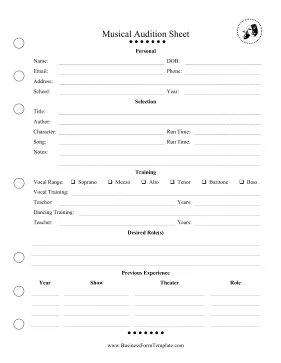
This comprehensive guide will explore the crucial components of an effective audition sheet. We’ll discuss why using a standardized form is beneficial and even provide a sample layout to inspire your next casting call. By the end, you’ll be equipped to create or choose the perfect template, making your auditions run smoothly and efficiently.
Key Elements of an Effective Musical Theater Audition Form
Creating or customizing a musical theater audition form template isn’t just about collecting names. It’s about gathering pertinent details that help casting directors make informed decisions quickly. A good form anticipates the needs of the production team, from initial callbacks to final casting choices. It ensures consistency across all applicants, making comparisons much easier.
An organized audition registration form saves valuable time during a busy day of auditions. It prevents the need for repetitive questioning and allows the actor to focus on their performance. Think of it as the first impression an actor makes, even before they sing their first note or deliver their first line.
Essential Personal and Contact Information
Every performer information sheet must begin with basic identification details. This section is fundamental for communication and scheduling follow-up auditions or callbacks. Ensuring this information is accurate and clearly presented is paramount.
- Full Legal Name: As it would appear on contracts or official documents.
- Preferred Pronouns: Shows respect and inclusivity for all auditionees.
- Contact Information: Phone number, email address, and an alternative contact if applicable.
- City/State of Residence: Useful for understanding commute times or local availability.
Performance History and Training Details
Understanding an actor’s background is crucial for gauging their experience level and suitability for specific roles. This section highlights their relevant training and stage presence. It helps casting directors visualize their potential within the production.
- Relevant Theater Experience: List of past roles, production titles, and companies.
- Vocal Range: Specific details like Soprano, Alto, Tenor, Baritone, Bass, and comfortable belt range.
- Dance Experience: Styles (ballet, jazz, tap, modern) and skill levels (beginner, intermediate, advanced).
- Formal Training: Acting classes, vocal coaching, dance lessons, and workshops attended.
Availability and Production-Specific Requirements
Auditionees need to confirm their availability during the production period. This helps avoid scheduling conflicts later in the process. It’s often one of the first things a casting team checks after a strong audition.
- Rehearsal and Performance Availability: Clear dates and times the applicant is available or unavailable.
- Conflicts: Any pre-existing commitments that might interfere with the production schedule.
- Role Preferences: While not always guaranteed, knowing what roles an actor is interested in can be helpful.
- Physical Attributes: Height, sometimes needed for costume design or stage blocking purposes.
Special Skills and Attachments
This section allows actors to showcase unique talents that might be beneficial for a musical. It also prompts for necessary supporting documents, completing their application package. These details can often be the deciding factor for certain character types.
- Special Skills: Instruments played, acrobatics, dialects, stage combat, puppetry, etc.
- Headshot/Resume Submission: Instructions for attaching these crucial elements.
- Union Affiliation: If applicable (e.g., Equity, SAG-AFTRA), this information is essential for contract discussions.
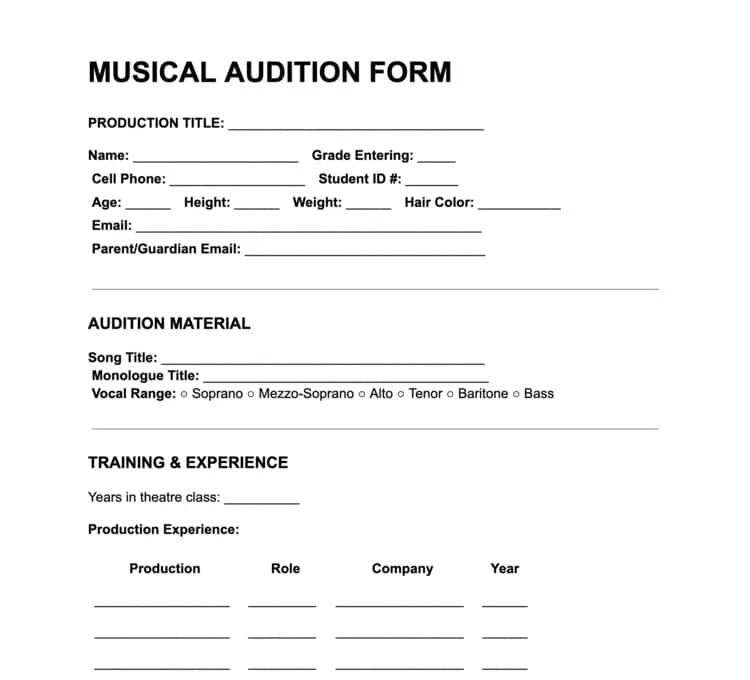
Here is a sample layout for a basic musical theater audition form template:
| Category | Information Requested | Applicant Entry |
|---|---|---|
| Personal Details | Full Name | _________________________ |
| Preferred Pronouns | _________________________ | |
| Phone Number | _________________________ | |
| Email Address | _________________________ | |
| City, State | _________________________ | |
| Vocal Information | Vocal Range | _________________________ |
| Comfortable Belt Range | _________________________ | |
| Audition Song Title / Show | _________________________ | |
| Dance/Movement | Dance Experience (Styles/Levels) | _________________________ |
| Experience | Recent Theater Roles (Show, Role, Company) | _________________________ |
| Formal Training (Acting, Voice, Dance) | _________________________ | |
| Availability | Major Conflicts for Rehearsals/Performances | _________________________ |
| Special Skills | List any unique talents (instruments, dialects, etc.) | _________________________ |
| Attachments | Headshot & Resume attached? (Yes/No) | _________________________ |
A well-crafted musical theater audition form template significantly elevates the professionalism and efficiency of any casting process. By standardizing the information collection, production teams can compare applicants more easily and make more informed decisions. It transforms a potentially overwhelming task into an organized and manageable part of bringing a show to life.
Take the time to either create your own tailored audition application or download a ready-made performer information sheet. Customizing a template to fit your specific production’s needs will undoubtedly save countless hours and reduce stress for both your team and the aspiring actors. Start improving your audition process today and discover the difference a detailed form can make.
