In today’s fast-paced work environment, fostering continuous learning and skill enhancement is crucial for organizational success. Employees often recognize areas where they need to grow, or departments identify new skills essential for upcoming projects. However, without a streamlined process, these vital training needs can get lost or overlooked.
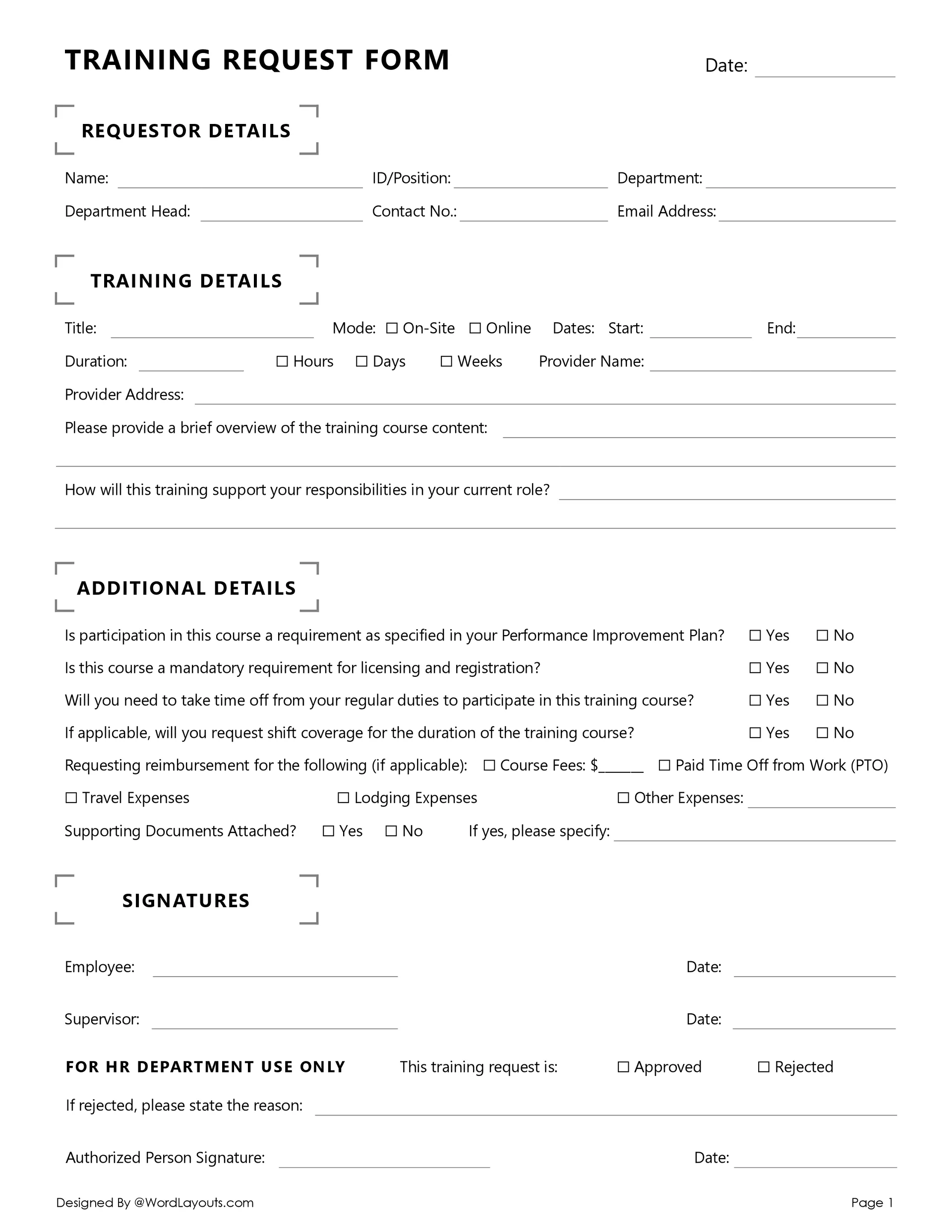
This is where a robust training development request form template becomes indispensable. It provides a structured way for individuals and teams to articulate their learning needs, ensuring that all relevant information is captured upfront. By standardizing this initial step, organizations can more effectively manage their learning and development initiatives, allocate resources wisely, and cultivate a culture of ongoing professional growth.
Key Elements of an Effective Training Development Request Form Template
A well-designed training development request form template is more than just a piece of paper; it’s a critical tool for managing and prioritizing learning initiatives within any organization. Its purpose is to gather all necessary details to assess the viability and relevance of a proposed training or development program. This ensures that resources are allocated to initiatives that genuinely align with strategic goals and employee growth.
An effective form should be comprehensive yet easy to understand, guiding the requestor through the process of clearly defining their needs. It helps to prevent misunderstandings and ensures that all stakeholders have the information they need to make informed decisions. Such a template is vital for streamlining the approval process and maximizing the impact of training investments.
Here are the essential sections and details to include in your training development request form template:
| Section/Field | Purpose and Details to Capture |
|---|---|
| Requestor Information | Name, Department, Job Title, Contact Information (Email, Phone). This identifies who is submitting the request. |
| Training/Development Title | A clear and concise name for the proposed training or development program. |
| Type of Request | Dropdown or checkboxes: New Training Program, Existing Program Enhancement, Individual Development Plan, Team Training, Departmental Training. |
| Rationale/Justification | Explain *why* this training is needed. What problem will it solve? What skill gap will it address? How does it align with company goals or individual development plans? |
| Target Audience | Who will benefit from this training? (e.g., Specific department, management, all employees, new hires). Include estimated number of participants. |
| Learning Objectives | What specific knowledge or skills should participants gain? What will they be able to *do* after completing the training? (Use action verbs). |
| Preferred Format | Checkboxes: Online Course, In-person Workshop, Blended Learning, Coaching, Mentorship, External Conference. |
| Desired Timeline | When is this training ideally needed? (e.g., “Within 3 months,” “Q3,” “Ongoing”). Specify start and end dates if known. |
| Budget Considerations | Are there any known costs or budget estimates? Has funding been allocated or requested? (e.g., “External vendor quote attached,” “Internal resources only”). |
| Recommended Provider/Resources | If applicable, suggest specific trainers, courses, or online platforms. Include links or contact information. |
| Expected Outcomes/Metrics | How will the success of this training be measured? (e.g., Improved productivity, reduced errors, new skill adoption, certification). |
| Approval Signatures | Space for immediate manager, department head, and L&D team approval. This formalizes the request process. |
Each section serves a vital role in providing a complete picture for the learning and development team. For instance, clearly stating the “Rationale/Justification” helps evaluators understand the strategic importance of the request. Similarly, “Learning Objectives” ensure that the training is goal-oriented and measurable.
By consistently using a standardized form, organizations can track training needs over time and identify common development themes across departments. This allows for more strategic planning of broader learning initiatives, fostering a more skilled and engaged workforce. Moreover, it empowers employees by giving them a clear avenue to express their professional growth ambitions.
Implementing a well-structured training request process is a smart investment for any organization committed to employee growth and operational excellence. By utilizing a comprehensive training development request form template, companies can ensure that all learning needs are identified, evaluated, and addressed systematically. This approach not only optimizes resource allocation but also builds a culture where continuous improvement is actively encouraged and supported, leading to a more skilled and adaptable workforce ready to meet future challenges.
